My New Favorite Summer Vertical Garden Fence Display
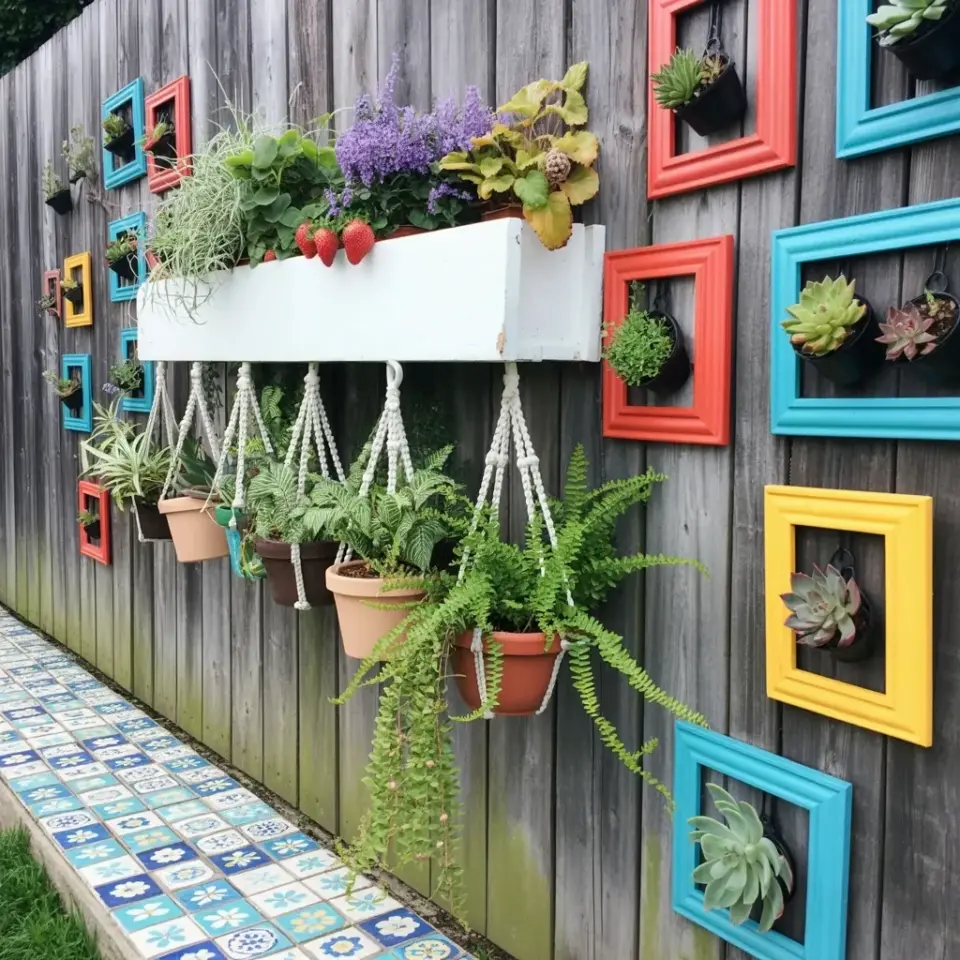
I finally put together a summer vertical garden fence display that makes my tiny patio feel like a secret jungle. It’s the one you see hanging on a weathered gray wooden fence, with a white shelf holding purple flowers and strawberries up top, and then these gorgeous macramé planters dangling down with ferns and succulents. Honestly, the first time I saw it, I couldn’t stop staring at the coral, turquoise, and yellow picture frames mounted on the fence. They’re not just frames – they’re mini planters. This is my idea of summer gardening done right: colorful, space-saving, and full of actual food. If your backyard is small or your patio feels blah, save this post for your next garden makeover.
Why a Vertical Garden on a Fence is Perfect for Summer
Look, a fence is wasted space if you only use it for leaning a broom against it. Here’s the thing: summer gardening gets hot, and plants in containers on the ground bake their roots. But when you mount everything vertically, you get better air circulation and more light. Plus, you can actually see your strawberries without bending over. Not gonna lie, I hate weeding – but vertical displays keep the soil mostly weed-free anyway. The photo shows a white shelf at the top, which is brilliant because it catches morning sun while the hanging plants below stay cooler in the afternoon. I’ve had my own version for three weeks now, and the strawberries are already blushing red.
- More light: Tall fences block nothing if you mount planters high.
- Less bending: Your back will thank you by August.
- Instant charm: A boring gray fence becomes a living art wall.
Choosing the Best Plants for Your Summer Vertical Garden
Ok so, the display I’m obsessed with uses purple flowers, strawberries, ferns, succulents, and trailing greens. That combo works because the plants have different needs. Strawberries love sun, so they sit on the top shelf. Ferns prefer shade – they hang below, shielded by the shelf above. Succulents? They’re drama queens that need perfect drainage, and those terra cotta macramé pots let them breathe. If you mix succulents with moisture-loving ferns, just make sure the ferns get more water and the succulents get the driest spot. I learned that the hard way when my echeveria turned to mush.
One weird detail: the photo shows those colorful picture frames – coral, turquoise, yellow – each holding small plants. I used frames from a thrift store, one with a dent in the top corner that I painted over. They’re basically shadow boxes with drainage holes drilled in the bottom. For summer, go with heat-tolerant choices like lantana for color, or small herbs like thyme that spill over the frame edges. Seriously, try oregano in the yellow frame – it looks amazing against the coral.
How to Build a Fence Garden Display with Hanging Planters
You don’t need to be a carpenter. I’m not. Here’s what I did after staring at that photo for an hour: First, find a sturdy white shelf – I used a simple floating shelf from IKEA, about 36 inches long. Mount it on your fence with heavy-duty brackets. Make sure it’s level unless you want your strawberries sliding off. For the hanging planters, buy a set of macramé hangers (or make your own if you’re crafty, but I’m not patient enough). Use terra cotta pots because they match the warm tones of the picture frames.
Now for the frames: get three cheap wooden frames in different sizes, paint them coral, turquoise, and yellow. Remove the glass and backing, staple landscape fabric across the opening, then add soil and small plants. Hang them on the fence using nails or Command hooks. The coral one holds a tiny fern, the turquoise one has creeping Jenny, and the yellow one is for my succulent collection. Below those, the macramé planters bounce slightly in the breeze – it’s hypnotic, honestly.
Strawberry Growing Tips for Vertical Gardens
Strawberries belong in vertical gardens, and I’ll die on this hill. They cascade beautifully over the white shelf. But here’s the catch: they need consistent watering because containers dry out fast. I water mine every morning before work, and sometimes again if the afternoon is brutal. Use a high-quality potting mix with compost mixed in. Also, plant everbearing varieties like ‘Albion’ or ‘Seascape’ so you get fruit all summer, not just one big flush.
The display in the photo has strawberries growing right next to purple flowers – that’s smart because the flowers attract bees for pollination. I plant my strawberries about 6 inches apart on the shelf. One more thing: don’t let the fruit touch the soil directly. Use straw or a mat under the berries to keep them clean. My first batch got slug-nibbled because I was lazy. Never again.
Colorful Picture Frames as Planters: A Trend That Works
I never thought I’d paint anything coral, but here we are. The coral, turquoise, and yellow frames in the display are a masterclass in color blocking against gray wood. They’re not just pretty – they actually hold plants. You can buy ready-made frame planters online, but they’re overpriced. Grab thrifted frames for a dollar each, spray-paint them, and drill a few drainage holes. The yellow frame I used has a slightly uneven paint job, but that gives it character. Honestly, the coral one is my favorite because it mirrors the red hints in the strawberries.
For small spaces, these frames become living art. Swap out the plants seasonally – succulents in summer, miniature pansies in fall. The best part? They weigh almost nothing, so you can rearrange them anytime your mood changes.
Maintaining Your Summer Fence Display Through the Heat
Here’s where most people give up. Summer heat wilts everything if you don’t plan ahead. My display gets direct morning sun and afternoon shade, which is ideal. But on 100-degree days, even the ferns droop. I installed a drip irrigation system on a timer – just a basic kit from Amazon, snaked along the fence. It waters the shelf and the hanging planters separately. The picture frames need hand-watering because they’re small, but that takes two minutes with a spray bottle.
Deadhead the purple flowers every few days to keep them blooming. Trim any yellow leaves from the strawberry plants. And check for spider mites on the trailing greens – they love dry, dusty fences. I wipe leaves with a damp cloth every weekend. It’s oddly satisfying, like meditating with dirt.
Budget-Friendly DIY Ideas for a Small Backyard Makeover
You don’t need a big budget. The white shelf cost me $12. Macramé hangers from a craft store were $8 each. The paint for the frames was leftover from other projects. Total spend: under $40. Compare that to buying a pre-made vertical garden system for $150. Plus, you can change out the plants for free by taking cuttings from neighbors. I snuck a piece of my friend’s trailing pothos – don’t tell her.
If your fence is ugly or peeling, a vertical garden is the ultimate distraction. The vibrant colors pull your eye away from weathered wood. And honestly, the sound of water dripping from the hanging planters onto the ferns below is my new favorite summer soundtrack.
So go ahead – save this idea for your next weekend project. Try it with a single shelf and one hanging planter if you’re nervous. But I bet you’ll end up with coral frames and strawberries before July hits. Pin this for later when you need inspiration. Your fence is waiting.
#verticalgarden #fencedecor #summergardening #diyplanters #hangingplants