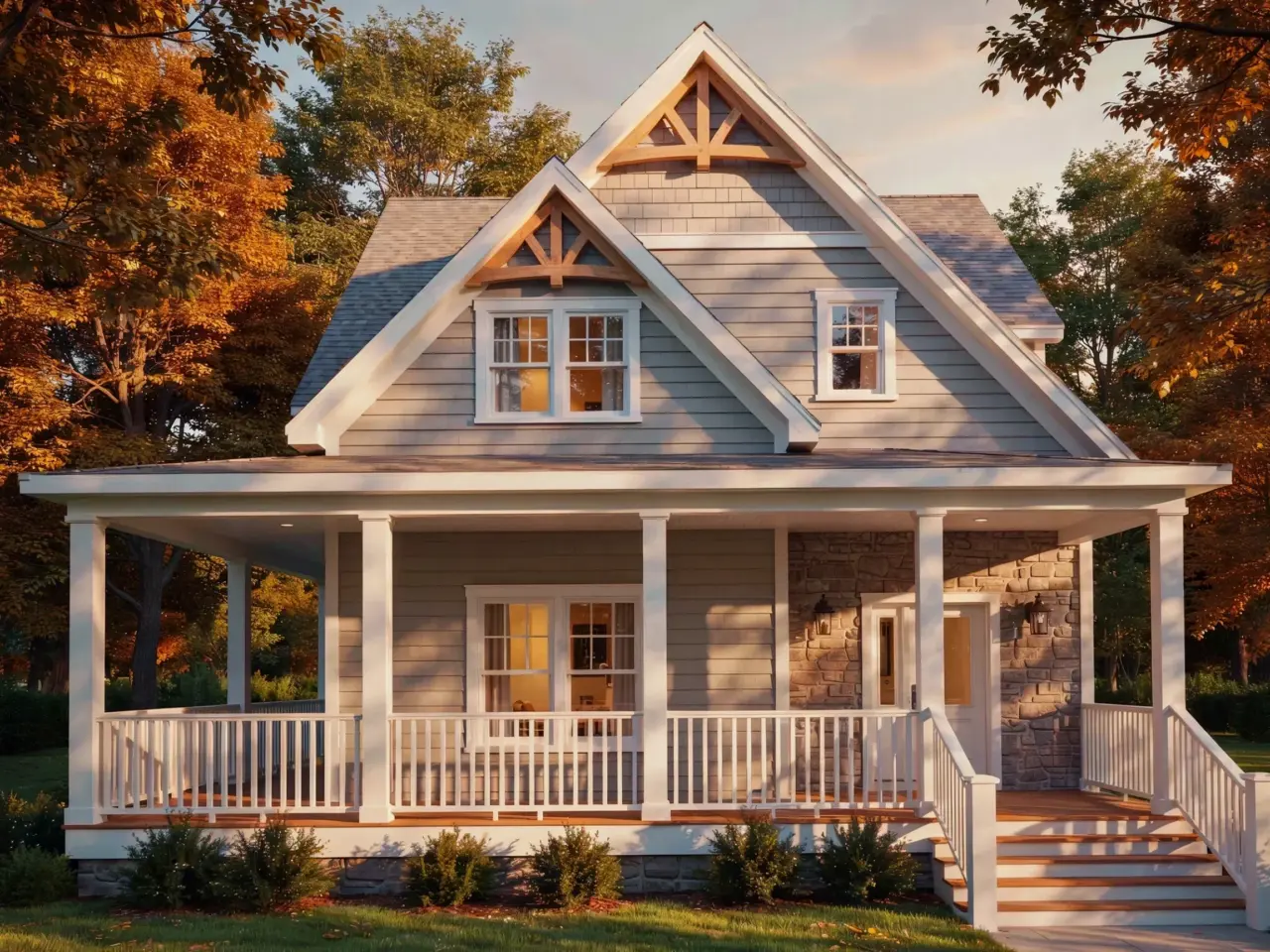
Picture the gravel driveway crunching under your boots, the smell of woodsmoke from the chimney, and a front porch that actually feels like an outdoor room. That is the real promise of a sophisticated country cottage elevation, and honestly, most people miss the mark before the foundation is even poured. Plan 58547SV gets it right, so I want to walk through the common mistakes I see in cottage style homes and how to avoid them, using this cozy cottage as the perfect example.
Pulling up to a house that whispers “welcome home” instead of shouting “look at my square footage” takes a few deliberate choices. Let me break down exactly what those choices are, because so many country house plans go sideways on the same five problems.
Mistake 1: Treating Stone Accents Like an Afterthought
So many homeowners pick a stone veneer in the last week of the build, and you can tell. The stone ends up looking like a sticker slapped on the front of the house. On Plan 58547SV, the stone is distributed with intention, wrapping key corners and grounding the base of the elevation so the whole structure feels planted in the earth.
Here is the thing: stone should tell a story about where the house sits, not decorate it randomly. Choose a palette of warm greys and earthy browns that match your region. And don’t spread it paper-thin across the facade. Concentrate it at the foundation, around the entry, and up one or two corners for vertical interest.
Mistake 2: Skimping on Porch Depth to Save Square Footage
A porch that is only four feet deep is not a porch, it is a ledge. You cannot fit a chair on it, let alone a coffee mug and a dog. The inviting front porch on this country cottage is deep enough to actually live on, which is the entire point of cozy cottage style.
Honestly, I have stood on porches where I had to squeeze sideways past a rocking chair to reach the door. It is miserable. Go for at least eight feet of depth if you want a true outdoor room. Add a ceiling fan and a couple of deep-seated chairs, and you will never watch a fall morning from anywhere else again. Not gonna lie, the screened-in option is worth every penny too.
Mistake 3: Letting the Roofline Get Too Complicated
Look, dormers are charming, but too many of them make a cottage elevation look like a wedding cake. The warm roof on 58547SV manages to feel substantial and welcoming without a dozen competing peaks. That is the balance you are chasing: one strong gable, maybe a secondary one, and then you stop.
For country house plans, the roof color matters just as much as the shape. A deep brown or bronze standing seam roof makes the whole structure feel cozier in autumn light. Avoid charcoal black unless you want the house to look like a monastery. Also, check your roof pitch from the street. A pitch that is too shallow reads as suburban, while a steeper pitch gives that storybook silhouette.
Mistake 4: Mixing Too Many Window Styles
I am all for variety, but a country cottage should not look like it had windows added in five different decades. Plan 58547SV keeps the windows consistent in shape and trim detail, which creates that calm, collected sophisticatedcountrycottage look. The rule of thumb is to pick one dominant window style, like double-hung with a divided light, and repeat it across the elevation.
Mix it up with a dormer window or a special arched feature at the entry, sure. Just keep the casing, sill, and muntin pattern the same everywhere else. That single decision will do more for your curb appeal than any fancy front door ever will.
Mistake 5: Ignoring the Landscaping Context
You can build the perfect cottage elevation and still have it feel naked without the right plantings. The problem is that most people either plant nothing or go way overboard with manicured hedges that fight the relaxed vibe. Cozycottage style wants a layered, slightly wild but intentional landscape.
Here is a practical checklist I use when looking at country house plans:
– Use native ornamental grasses to soften the foundation line.
– Plant in odd numbers, three or five of the same shrub, not one of everything.
– Let some perennials spill over the edge of the porch or walkway.
– Keep the front path wide enough for two people to walk side by side.
– Leave a spot for a big, rustic planter near the entry. A ceramic urn or galvanized tub works great.
The goal is to make the house look like it has been gently settled into its site for decades, not dropped there last week. And for fall, honestly, a couple of pumpkins and some dried hydrangea on the steps do more than any expensive ornament from a catalog.
Mistake 6: Underestimating the Details That Make a House Feel Like Home
I remember visiting a builder’s model once that had every upgrade imaginable, but it felt cold. Turns out, the porch lights were tiny, the address numbers were barely visible, and the front door hardware looked like it came from a hotel supply closet. Those little elements seem minor, but they set the tone for the whole place. A cottage elevation only works when the scale of the fixtures matches the warmth of the architecture.
Oversized exterior lights, a beefier front door, and honest-to-goodness wood or composite shake details on the gable can transform a generic facade into something you want to hug. Look for a single standout detail, like the stone chimney on 58547SV, and let it carry the design without adding clutter. And treat your garage side or rear entrance with the same material care, because a walk around the whole house should feel consistent.
Getting the Roof Overhang and Trim Right
This is a subtle one, but the thickness of your fascia and trim changes the entire character of the elevation. Thin, flimsy trim makes a country cottage look like a mail-order kit. Deeper eaves, wider fascia boards, and a little dentil or bracket detail under the roofline add that handcrafted feel that separates an ordinary house from a real character home.
On Plan 58547SV, the warm roof and substantial trim give the facade a kind of quiet confidence. It is not showing off, but it knows exactly what it is. Match your eave depth to your window trim width and you will have a unified look that reads as professionally designed, even if you are working with a stock set of plans.
Start With the Feeling You Want, Not a Trend
There will always be someone telling you to chase a certain paint color or a specific tile pattern, but a cozy cottage is about how the space makes you feel. For me, that feeling is a slow Saturday morning in late October, rain on the roof, and no place I need to be. Pick materials and proportions that support that atmosphere and you will not go wrong.
If you are browsing country house plans with a serious eye for detail, keep this one in mind. Plan 58547SV proves that you can have the warmth of a farmhouse and the polish of a tailored cottage in the same elevation. Save it for when you are ready to start measuring for porch furniture. A comfortable rocking chair, a good blanket, and a hot cup of coffee are the only other things you need to add.
Leave a Comment