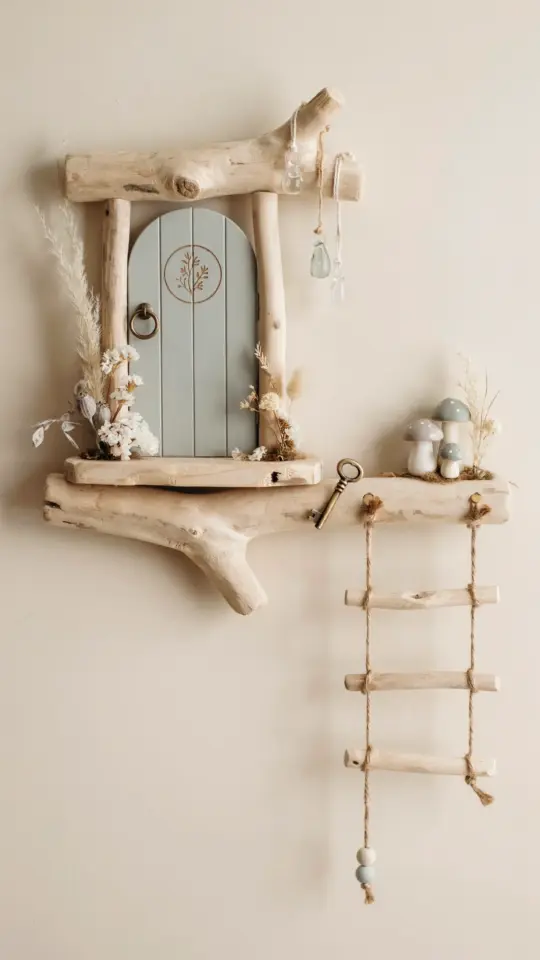
If you have ever wanted to add a little magic to your home, a cottage style fairy door is one of the easiest and most charming ways to do it. These tiny handcrafted doors look like they belong at the base of an old tree or tucked into a garden wall, and they invite a sense of wonder into any room. I discovered them a few years ago while looking for something unique to place on my bookshelf, and I have been hooked ever since. In this article I will explain exactly what a fairy door is, why natural materials make them special, and how you can bring this sustainable whimsical art into your own space. No prior knowledge needed, just a love for small, beautiful things.
What Exactly Is a Fairy Door?
A fairy door is a miniature decorative door, usually between four and eight inches tall, that is designed to look like a real entrance. The idea is that fairies, or other tiny woodland creatures, might use it to travel between our world and theirs. Some people place them in fairy gardens, others set them on cottage shelves or inside houseplants. The door itself is the focal point, but you can also add tiny signs, windows, or even a little welcome mat. For a beginner, think of it as a piece of storytelling decor that sparks imagination every time you walk past it.
Fairy doors have become popular in cottagecore and whimsical decorating circles because they break the usual rules of furniture scale. They do not have to match anything. They just have to feel inviting and magical. And when they are made from natural elements like bark, twigs, moss, and stone, they blend beautifully with plants and wood accents.
Why Choose a Nature Inspired Fairy Door?
Many fairy doors you see in big box stores are made of resin or painted plastic. They look shiny and uniform, but they do not feel like they belong outside. A nature inspired fairy door is different. It is crafted from real materials that have their own textures, colors, and imperfections. A door made from a slice of birch bark feels rough and organic. Moss glued along the top looks like it has been growing there for years. Tiny pebbles form a pathway that you can actually touch and rearrange.
Choosing a nature inspired piece also means you are bringing a piece of the outdoors inside without harming living trees or plants. Artisans often use fallen branches, salvaged bark, and dried moss that would otherwise go to waste. The result is something that smells like forest and changes slightly in the light depending on how the wood grain catches the sun. For me, that is much more satisfying than a plastic replica that looks the same forever.
How to Incorporate a Fairy Door into Your Cottage Decor
Once you have a fairy door, you might wonder where to put it. The good news is that almost any nook can become a tiny portal. Here are a few simple placement ideas that work well for beginners:
- Inside a large houseplant pot. Set the door against the soil at the base of a fern or monstera. It looks like the fairies live among the roots.
- On a bookshelf. Lean the door against a stack of books or between two small vases. Add a tiny tea light lantern next to it for extra coziness.
- In a fairy garden. If you have a shallow container with soil, succulents, and pebbles, the door becomes the entrance to the whole miniature world.
- On a windowsill. Place it next to a small pot of herbs. The natural light will highlight the textures of the bark and moss.
- Behind a vase or candle. A partially hidden door creates mystery. People will notice it only when
#CottageDecor #FairyDoor #Handmade #SustainableArt #NatureInspired